
Animal Health
Highly Pathogenic Avian Influenza (HPAI)
Current Status in Wyoming
Cases of Highly Pathogenic Avian Influenza (HPAI) in backyard poultry have been reported in Wyoming annually since 2022. In 2024, a case was reported in dairy cattle in Wyoming. More information about HPAI detections in Wyoming can be found on the USDA Avian Influenza site.
The Wyoming Livestock Board works with the United States Department of Agriculture – Animal and Plant Health Inspection Service (USDA-APHIS) to respond to suspect and positive HPAI cases. Avian Influenza is a reportable disease to the Wyoming Livestock Board.
To keep HPAI out of your flock, biosecurity is key! Visit USDA Defend the Flock or the Small Flocks Collaborative for more information on how to protect your flock.
What is Highly Pathogenic Avian Influenza (HPAI)?
HPAI is an infectious viral disease of birds that can cause high mortality rates in domestic flocks. Migratory waterfowl are the primary source of avian influenza. Wild birds can be infected and appear healthy, but shed virus in feces, saliva, and respiratory secretions. Domestic poultry become infected through direct contact with infected wild birds, or through contact with contaminated objects, equipment, or the environment.
HPAI has been detected in other species such as dairy cattle, wild mammals, cats, and rarely humans. For more information on HPAI in other species visit the following sites:
Clinical signs of HPAI in Poultry
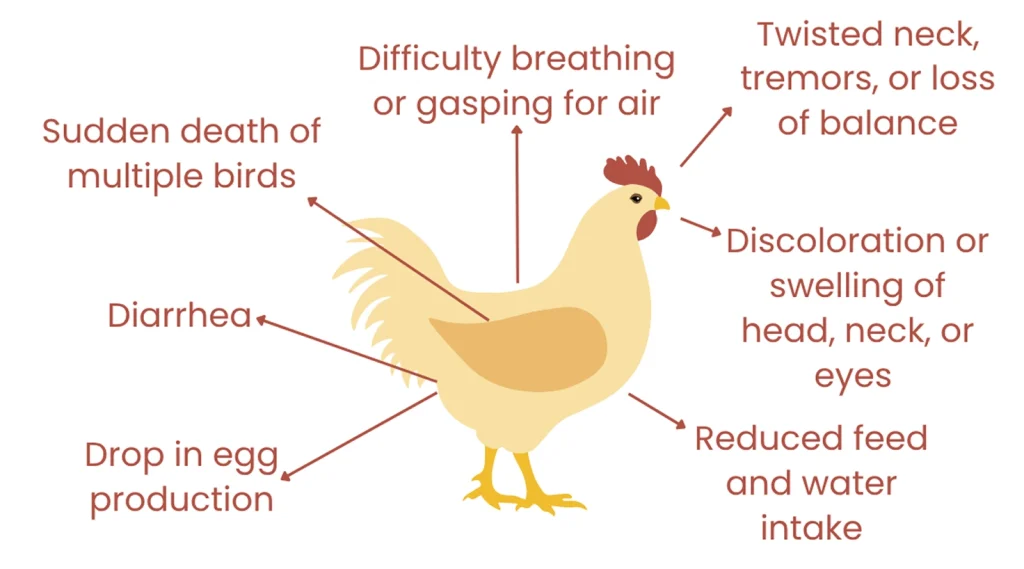
The most common sign of HPAI in a flock is sudden death of multiple birds within 24-48 hours. If multiple birds die suddenly, call your veterinarian and the Wyoming Livestock board immediately.
Possible early signs of HPAI include:
Transmission
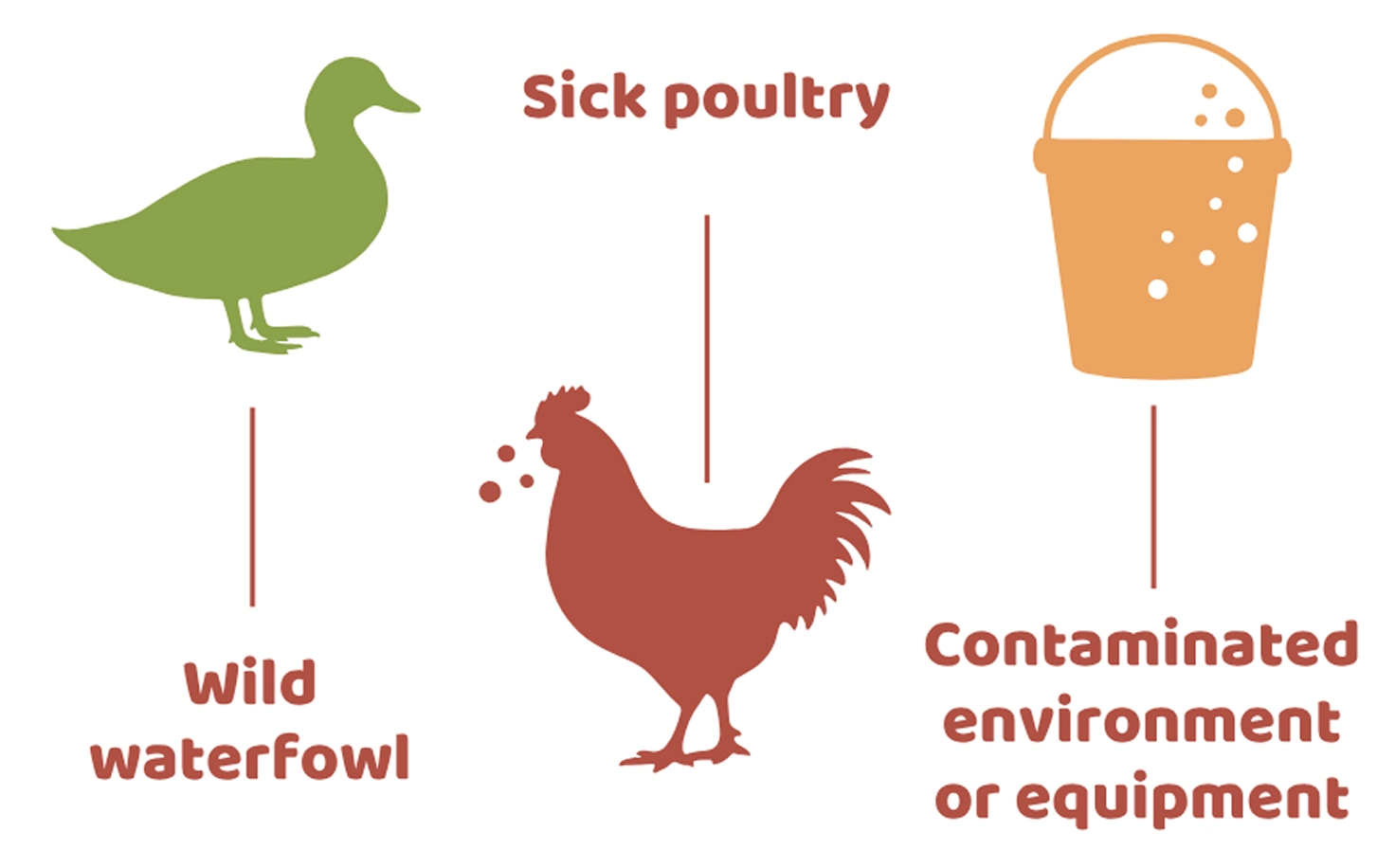
Wild waterfowl (such as ducks and geese) are the main source of the virus and they can shed the virus via feces and respiratory secretions. Waterfowl can shed virus without showing clinical signs. Additionally, HPAI can spread from flock-to-flock through droppings, feathers, saliva, and respiratory secretions.
People, pets, wildlife, vehicles, and equipment can act as fomites (contaminated objects or surfaces) and indirectly transmit the virus from infected waterfowl or poultry to other flocks.
Diagnosis
Diagnosis of HPAI in a flock is based on clinical signs and confirmation of the presence of the virus in poultry with laboratory testing. If HPAI is suspected in a flock, the Wyoming Livestock Board will work with the flock owner and their veterinarian on the process of submitting samples to an approved veterinary diagnostic laboratory (such as the Wyoming State Veterinary Laboratory). Positive results are confirmed by the National Veterinary Services Laboratory (NVSL).
Prevention
Improving flock biosecurity is the best prevention for exposure to avian influenza. Domestic poultry should not have contact with wild waterfowl. Poultry located near canals, ponds, rivers, or other bodies of water are at increased risk of exposure, especially during migration periods. Biosecurity measures can include cleaning vehicles and equipment, changing clothes upon contact with birds, and limiting visitors.
HPAI is considered low risk to human health according to the U.S. Center for Disease Control, but people should avoid contact with sick/dead poultry or wildlife. If contact occurs, wash your hands and change your clothing before having any contact with poultry and wild birds.
Reporting
Immediately report suspected cases of HPAI to your veterinarian and the Wyoming Livestock Board at 307-777-7515 (business hours).