
Animal Health
New World Screwworm (NWS)
Current Situation
New World Screwworm (NWS) was detected in the United States on June 3, 2026. Cases have been confirmed in Texas and New Mexico. The United States Department of Agriculture (USDA) and state agencies have been working diligently to control, treat, and prevent the spread of NWS in infested zones and surrounding areas.
Key Resources
- Current case counts can be viewed on the USDA New World Screwworm Dashboard.
- For up to date information on NWS cases and response, visit Screwworm.gov and review the USDA New World Screwworm Response Playbook.
- For more information on continuity of business and movement requirements from infested zones, see USDA’s New World Screwworm National Continuity of Business Standardized Animal Movement Guidance.
What is New World Screwworm (NWS)?
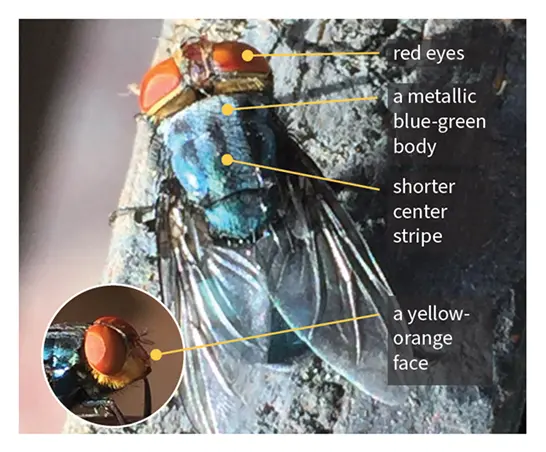
New World screwworm (NWS, Cochliomyia hominivorax) is a serious pest that affects livestock, pets, wildlife, and, less commonly, people and birds. Adult screwworm flies are about the size of a common housefly or slightly larger. Their larvae feed on the living tissue of warmblooded animals.
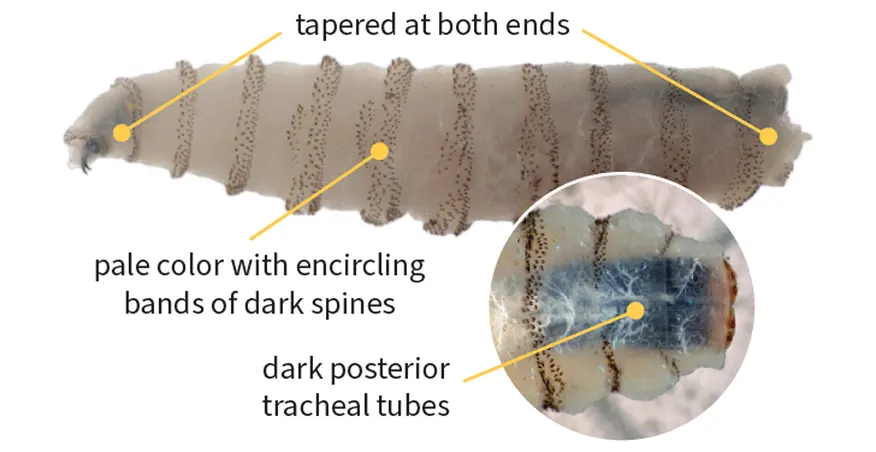
Screwworm larvae (maggots) burrow into a wound, feeding as they go like a screw driving into wood. The maggots cause extensive damage to the host’s tissue. The wound becomes deeper and larger as more maggots hatch and feed on living tissue.
Clinical Signs of NWS
- Wounds that worsen rapidly despite treatment
- Swelling, inflammation, or increased pain around a wound
- Foul odor emanating from a wound
- Bleeding or abnormal discharge
- Visible larvae within a wound
- Apparent movement within a wound
- New or worsening wounds following travel from affected area
Monitor your animals daily for wounds and other signs of NWS.
Transmission
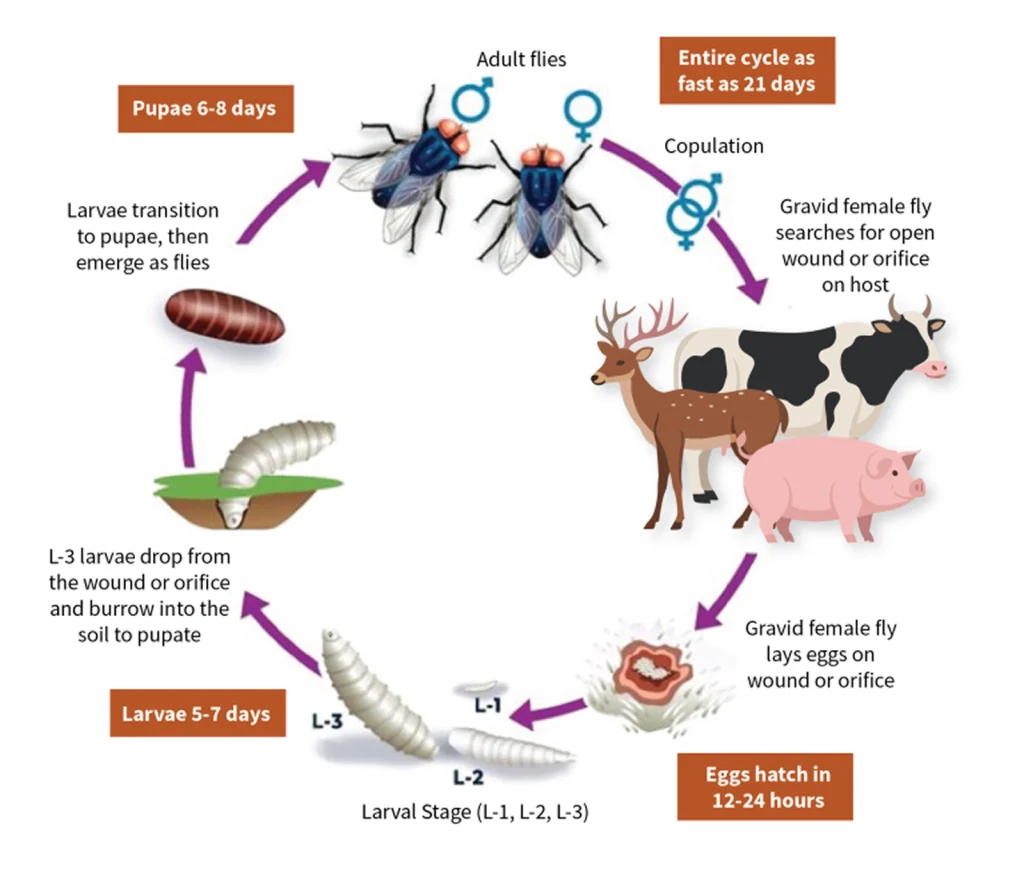
- Females are attracted to a live animal’s wound and/or opening. This is a prime place to lay eggs. Openings can be anything from a tick bite, nose, eyes, genitalia, or umbilicus in a newborn animal, wounds from dehorning, castration, shearing, barbed wire fences, as well as shedding of antler velvet in deer.
- Females mate once in their lifetime and store sperm from a male to fertilize eggs over time.
- Once females find a wound on a warm-blooded animal, they can lay anywhere from 200-300 eggs at one time, and possibly up to 3,000 eggs in their lifetime.
- Eggs hatch into larvae, or maggots, and burrow into healthy, living tissue. The maggots feed for 3-7 days and cause the wound to become bigger, causing serious tissue damage.
- Once the maggots are done feeding, they drop from the animal to the ground to become adults in approximately 7-10 days, and the cycle repeats.
Diagnosis
Prevention
Reporting
Immediately report suspected cases of NWS to your veterinarian and the Wyoming Livestock Board at 307-777-7515 (business hours).