
Animal Health
Trichomoniasis
The Importance of Trichomoniasis in Wyoming
Trichomoniasis, commonly referred to as “trich,” is a venereal disease of cattle caused by the protozoa Tritrichomonas fetus.
Trichomoniasis is an economically devastating disease because it causes significantly reduced calf crops, infertility, and late-bred cows. Because of its significant impact and highly contagious nature, trichomoniasis is a reportable disease. The Wyoming Livestock Board administers trichomoniasis -specific rules to ensure trichomoniasis control. The full Chapter 15 rules on Trichomoniasis control in Wyoming can be found here.
Symptoms & Transmission
The first sign of a trichomoniasis infected herd is often an abnormally low pregnancy rate, and/or a significant percentage of late-bred cows. Bulls show no clinical signs of the disease, but carry the trichomoniasis organism in the tissue of their penis and sheath. Bulls spread the trichomoniasis organism from cow to cow, which causes abortions and infertility for several months while the cow clears the infection. Bulls are unable to clear the trichomoniasis infection and are considered infected for life. Cows clear the infection with 120 days of sexual rest.
Trichomoniasis does not affect the meat or milk, and is not a disease of food safety concern.
Prevention
Bovine Trichomoniasis Cases in Wyoming
Due to an extensive elimination program in the 1990’s and early 2000’s, which involved mandatory trichomoniasis testing in southeast Wyoming, trichomoniasis incidence has decreased significantly. From 2018-2022 trichomoniasis was not detected in Wyoming.
However, trichomoniasis is highly contagious and is present in cattle across the United States. Continued testing is the key to continued disease control!
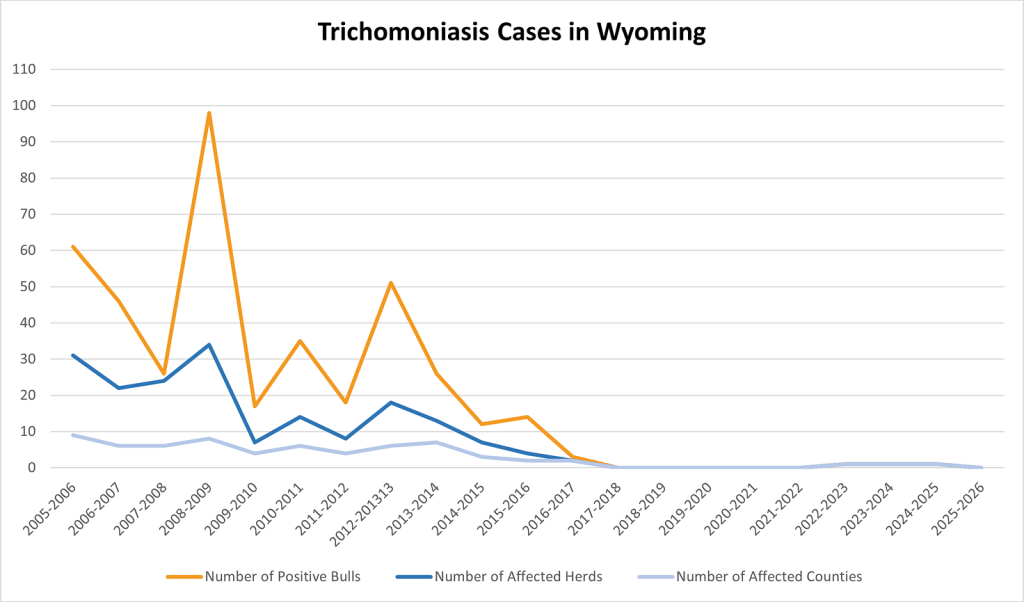
Trichomoniasis Testing in Wyoming
Only Trichomoniasis Certified veterinarians are allowed to test bulls for trichomoniasis in Wyoming. Trichomoniasis certification must be renewed every 5 years. Contact your veterinarian to schedule an appointment to have your bulls trichomoniasis tested.
It is recommended to sexually rest bulls for 14 days prior to trichomoniasis testing. This allows the trichomoniasis organism, if present, to replicate at a detectable level prior to sample collection.
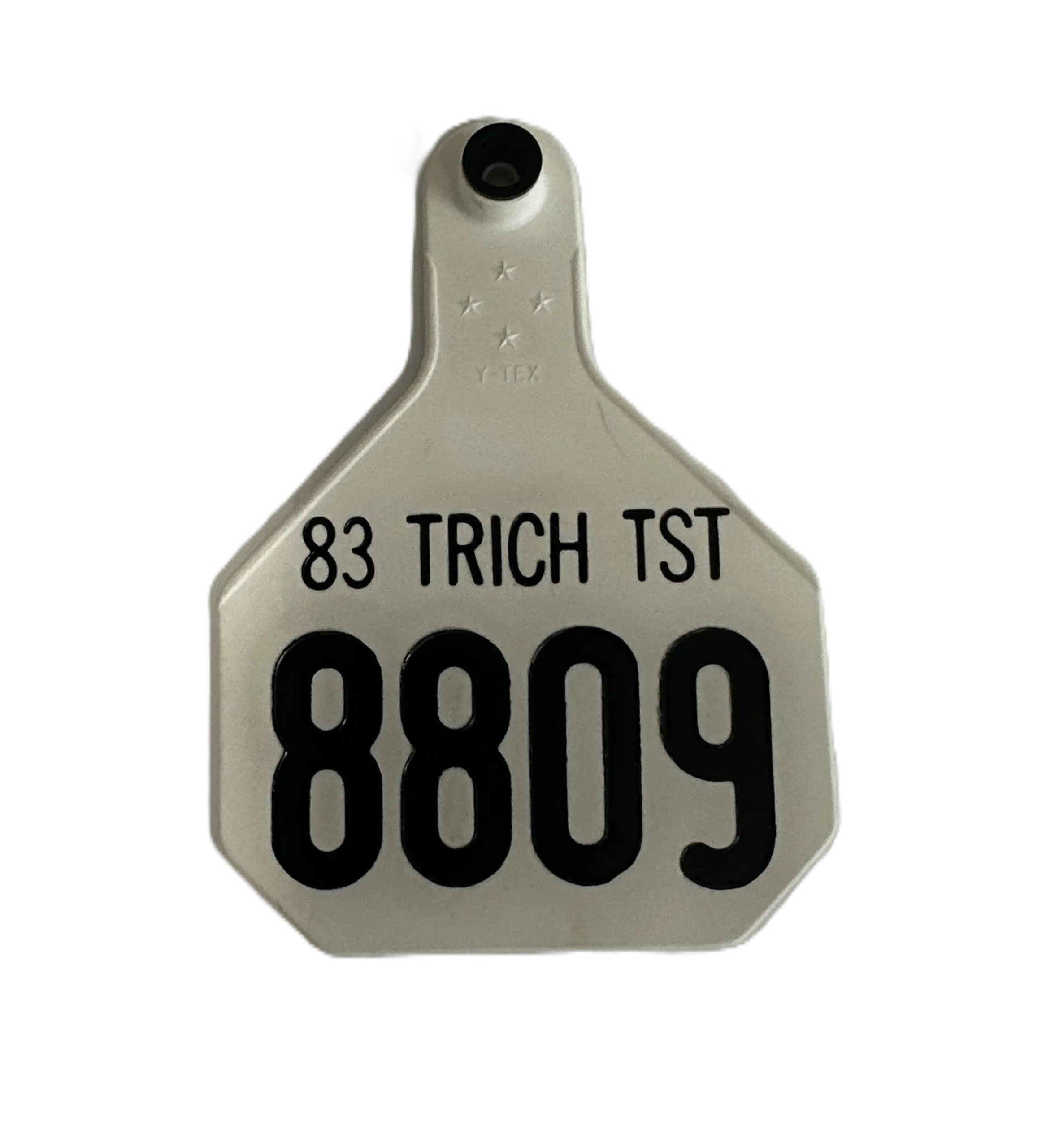
If your bulls are staying in Wyoming at the time of trichomoniasis testing, a current Wyoming Trichomoniasis tag will be applied. The color of these tags rotates annually in September. The 2026 to 2027 season trichomoniasis tags are the color of white.
When is trichomoniasis testing required?
- Prior to importation of a bull into Wyoming if the bull is non-virgin or 18 months of age or older
- Prior to the sale or lease of a bull
- Prior to turn-out in a common grazing arrangement
- Prior to importation to another state: see the destination state import requirements
- Prior to selling at a Wyoming livestock market if the bull is to be sold as a breeding bull. Otherwise, per Ch 15 Rules, the bull is to be sold for slaughter only